Insights from creatorsAbout usApply now
  • Insights from creators
  • About us
Apply now
Privacy PolicyWebsite Terms

© 2026 Creator by Toptal. All rights reserved.

Monetization
Brand Collabs
10 min read

How to Build an Influencer Media Kit That Lands Brand Deals

Brands are pouring more money into influencer marketing in 2026, but a polished media kit is what separates the creators landing deals from those getting ghosted. This guide walks you through exactly what brands scan for in the first 30 seconds, what to include (and what to skip), and how to use your kit to turn cold pitches into paid partnerships. Whether you're building your first kit or sharpening one you already have, you'll leave with a clear, repeatable system for converting your audience into income.

Kimia Kalbasi
total-icon
By Kimia Kalbasi
10 years of experience
90,000 followers/subs
@kimiaskravings
@kimiakalbasi
Verified Creator

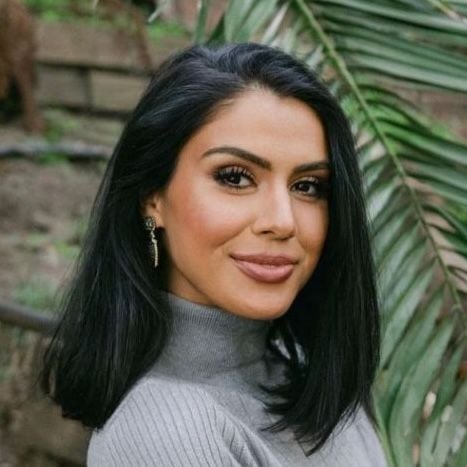
Kimia is a San Francisco-based content creator and influencer who has completed more than one hundred brand deals with partners including Uber, Instacart, LinkedIn, American Express, and Vuori. For monetization, she specializes in brand deals and UGC on Instagram. As an influencer marketing strategist, she helps companies build lasting influencer programs that drive awareness, engagement, and growth.

EXPERTISE
Instagram
Monetization
Brand Deals
SHARE:

With brands spending more on influencer marketing in 2026, now is the time for growing creators to capitalize. One of the easiest ways to stand out in an increasingly crowded field of competition is with a media kit.  

This digital document acts as both a resume and portfolio, providing a brief bio and key stats about your creator business. 

If you are designing a media kit for the first time or looking to add more polish to one you’ve already crafted, keep reading. Unlike other guides, this one will detail not only what a media kit for influencers should include, but also what brands actually want to see, so you can turn your efforts into a steady stream of income this year.

What Brands Actually Look at When They Open Your Media Kit

Many brand marketers look at dozens of media kits a day, so when they open yours, they are quickly looking for audience fit and an impressive engagement rate first, not follower count. Decision-makers spend ~30 seconds on a first pass, so there’s no need to divulge your life story. 

The 30-Second Scan Test

Marketers skim before they dig deeper. If the layout and top-line numbers don't land in 30 seconds, the rest of the kit might not get read.

Engagement Over Follower Count

Good news for smaller creators: Engagement rate matters more than follower count in 2026. That’s because engaged users are much more likely not only to see your brand content, but also to save it, share it and ultimately make a purchase. A creator with 15K followers and 6% engagement is often more attractive than one with 200K and 1.5%.

How to Make a Media Kit (In a Hurry)

It’s entirely possible to pull together a compelling media kit in as little as 20 minutes. Here’s a quick-start roadmap if you need to get something together fast:

  • Write a 2-3 sentence bio that tells who you are and what your niche is (e.g., “solo budget traveler bringing diversity to the great outdoors”).
  • Pull your engagement rate and two other stand-out metrics, whether it’s your audience demographics, reach, views, or follower count. 
  • Add 2-3 examples of your recent content. 
  • Provide a rate card for your services.
  • Drop it into a template and you’re done.

What to Include in an Influencer Media Kit (2026 Checklist)

Your media kit is often the deciding factor for marketers looking to line up partnerships. They want to see personality, professionalism, and proof of value before turning over their brand’s hard-won marketing dollars, so make sure your media kit conveys these key traits in a clear and compelling way.

Your Bio: The Elevator Pitch That Makes Brands Care

Less is more when it comes to your bio. What brands really need to know is your niche (to see if it aligns with their core consumer base) and why they should work with you. 

Briefly mention your unique selling point – what sets you apart from other creators – whether that’s your aesthetic, storytelling approach, or expert knowledge. 

A common mistake is making it too long or too personal. If you have a unique angle (e.g. a licensed personal trainer offering fitness advice or a teacher reviewing ed-tech), that's the lead.

Social Media Metrics That Actually Matter

Your metrics make or break brand deals, because they indicate whether a partnership with you will actually pay off. 

Below are some common metrics that brand marketers look for in media kits, but you don’t have to include every one. Your engagement rate is non-negotiable, but leave out other stats that don’t serve you. It’s okay to be selective. Just remember to refresh your metrics every 1-3 months.

  • average engagement rate 
  • follower count (by platform)
  • average reach (total unique users who see your content)
  • average impressions (total views of your content)
  • growth rate (monthly follower growth to show upward trends) 
  • average watch time or completion rate for YouTube, TikTok and Instagram Reels
  • average saves (an engagement metric on Instagram and TikTok that signals high-purchase intent)
  • website/link performance (average clicks or clicks-to-conversion)

💡 Use averages to your advantage

Marketers want recent data, but it’s up to you whether to provide stats from a 30- or 90-day period. Pick the average that looks best for you, and briefly disclose in your kit (e.g. “in the last 90 days”).

Audience Demographics: Proving You Reach Their Customer

Audience demographics are crucial because they tell marketers whether or not they will reach potential customers by partnering with a particular creator, yet it’s where a lot of influencers fall short when crafting their media kit. 

Marketers are looking for overlap between their consumer base and your audience, which is why you should include your audience’s age (broken out by distribution or top range), gender split, and top geographic locations. You can pull from each platform’s native analytics to get this info.

Location is especially important. A brand that only sells in the UK won't care about a creator whose audience is 80% US-based. 

For TikTok creators, you can also access analytics on your audience’s top interest categories (e.g. fashion, tech), a stat worth mentioning if it’s a noteworthy niche.

Content Examples: Show, Don't Tell

Providing examples of your strongest content is indeed a great way to give marketers a quick snapshot of who you are, especially if your content is highly visual. 

Choose 1-3 of your strongest pieces, including a mix of organic and branded content if available. Each should have a thumbnail photo plus the key metric that points to its success (views, engagement, saves). For newer creators without brand work, organic content that showcases your style and quality will work.

Past Brand Collaborations and Testimonials

Previous partnerships are a powerful proof of your abilities. If you’ve worked with brands in the past, include their logos, a one-line campaign description, and a snapshot of the results (impressions, clicks or conversions, for example). A short testimonial quote, if you have it, adds credibility. 

It may be tempting to pad your media kit with every minor interaction you’ve had with a brand, but resist the urge. You risk torching your credibility if a marketer asks about a logo on your media kit, and you can’t point to a real relationship or real results. 

That’s why newer creators may want to skip this section entirely, rather than faking it. If you have relevant industry experience in your niche, opt for pointing to your credentials, previous clients, media appearances or a testimonial from an expert in your field.

Pricing and Services: How to Present Your Rates

Seasoned influencers are split on whether you should include pricing in your media kit. If your rates are too high for a brand’s budget, you risk scaring potential partners away before you can negotiate a deal. If your rates are too low, you leave money on the table. That’s why a lot of creators prefer to omit rates entirely and begin the pricing conversation once they’ve piqued the interest of a prospective partner. 

Just be aware that stating "rates available upon request" can be frustrating for brands trying to work quickly. Providing starting rates helps brands gauge budget compatibility–so long as you make it clear the included rates are your floor, and not your ceiling. (Always include a plus sign on your rates, e.g. $500+.) You’ll also want to note in the fine print that add-ons like usage rights, exclusivity, and whitelisting will increase your rate.

Presenting your pricing as bundles (e.g., "1 Reel + 2 Stories") rather than individual line items can help you net bigger deals.

Media Kit vs Rate Card: What's the Difference?

A quick clarification on the difference between media kits and rate cards: A media kit spells out your market positioning and proof of value (who you are, your metrics, your audience, your work). A rate card simply details your pricing. Many creators combine both into one document in 2026, but they serve different purposes. If a brand asks for your "rate card," they want pricing. If they ask for your "media kit," they want the full picture. 

Contact Information: Make It Effortless

If you make it difficult for marketers to get in touch, they won’t. Include your professional email address (not a personal Gmail), social handles, and a website link, if applicable, in an easy-to-read spot.

Media Kit Design Tips That Make You Look Professional

It’s entirely possible to net brand deals with a basic kit, but with just a few easy tweaks, you can create a polished presentation that conveys the professionalism bigger brands want to see. If you’re creating a static document, keep these recommendations top of mind:

  • Keep it brief and aim for 1-3 pages.
  • Keep the branding consistent throughout.
  • Include a professional-quality headshot or photo of yourself. 
  • Provide plenty of white space so you don’t overcrowd your kit.
  • Make it mobile-readable.
  • Make it a PDF.

The Pros and Cons of Using a Media Kit Template

The easiest way to ensure your kit looks polished is to opt for a template. Look for one that matches your branding. (Black, bright colors and bold fonts work well for finance and tech for example, while soft colors and serif fonts are a better fit for lifestyle content.) Canva is the go-to tool for free templates, but a search for ‘free influencer media kit’ will net you plenty of options. 

Just keep in mind that your competitors may use the same template.

Consider Using an Interactive/Live Media Kit 

An increasing number of influencers are shifting from static PDFs to interactive, live media kits in 2026 to showcase real-time analytics and recent videos. 

These digital kits are hosted on platforms like CreatorsJet, InfluenceFlow and Beacons.ai, and synched with your social media accounts to automatically update follower counts and engagement rates. Brands like live kits because they know the data is accurate and up-to-date. 

Creators like live kits because they don’t have to spend hours manually updating their media kit every month. Live kits also allow creators to embed video directly on their profile page, which can be especially effective for TikTok and YouTube influencers. 

Media Kit Mistakes That Make Brands Pass

Before you send your media kit to dozens of brands, give it a thorough edit, and make sure it doesn’t contain one of these common mistakes that will repel the people you’re trying to impress. 

  1. Outdated or inaccurate stats: Sending a media kit with metrics that are months old is a major red flag. Similarly, misrepresenting your analytics, such as highlighting a viral post's performance as the average, will make marketers wary of working with you.
  2. Focusing on vanity metrics: High follower counts are less important than engagement rates and audience demographics. 
  3. Not mobile-friendly: Many marketers review media kits on phones; if they have to zoom in or can’t discern your info at a glance, they will discard it.
  4. Information overload: Cramped pages with too much text will overwhelm your kit’s recipients. And if it goes beyond three pages, many marketers will simply stop reading.
  5. Amateurish aesthetics: Using poor quality images, inconsistent fonts, or too many colors makes you look unprofessional.
  6. No clear contact info: Brands shouldn’t have to guess how to hire you. 
  7. No proof of value: Listing past brand collaborations without showing tangible results (e.g., number of saves, impressions, or ROI) reduces the impact of your experience.
  8. Generic bio: A vague bio that doesn't explain your niche or what pain point you solve for your audience makes you indistinguishable from other influencers.

How to Use Your Media Kit to Get Brand Deals

Now that you know what to include in your kit, it’s time to put it to use. Don’t let it gather digital dust by waiting for brands to come to you. Most deals start with a creator making the first move, especially for nano (1K-10K followers), micro (10K-50K followers) and smaller mid-tier influencers (50-500K followers). 

Pair the kit with a short email, and be sure to do the following:

  • Use a concise and relevant subject line
  • Introduce yourself with a short line that includes your niche
  • Briefly explain why the brand is a fit for your audience
  • List a short content idea or two
  • Provide proof of value, like stats from a previously successful partnership
  • End with a call to action that encourages a reply, e.g., "Are you open to paid partnerships this quarter?"

Customizing Your Kit for Different Pitches

Don't send the same generic kit to every prospective partner. Swap in content examples targeted to impress each brand you pitch by looking at their recent ad campaigns and influencer partnerships. You may want to tweak your bio or emphasize different facets of your audience demographics, too. 

You don’t have to do a full rebuild every time. You just want to highlight what matters most to that specific brand.

Where to Host Your Media Kit for Easy Access

From static PDFs to live kits, there are plenty of options for hosting your media kit, and each has its own pros and cons:

  • PDF via email. Sending your kit directly gives you full control over your kit’s design and who sees it, but requires constant updates and outreach.
  • Personalized website. Hosting your kit on a dedicated site looks professional and allows marketers to find your media kit without emailing. Requires constant updates.
  • Cloud storage. Platforms like Google Drive and Dropbox are a reliable, low-cost method for sharing your media kit. Requires constant updates.
  • Link in bio tool. Platforms like Linktree allow creators to create a link for their kit, at a fraction of the cost of a personal website. Requires constant updates.
  • Live link platforms. Sites like CreatorsJet and Beacons.ai pull real-time analytics across social platforms, saving hours on manual updates, but can be too generic for lifestyle creators who need to convey aesthetic appeal. 

Your Media Kit Is a Living Document, Not a One-Time Project

Social media is constantly evolving, your audience is steadily growing, and brands’ budgets are  always changing. Your media kit has to keep up. It should grow right along with you. Update your stats every one to three months, add new brand work as you get it, and revisit pricing as the industry and your business evolves. 

Even a simple, well-organized kit puts you miles ahead of most creators. It’s one of the easiest, low-lift ways to boost your income as a creator. With just a bit of effort, you can net an immediate payoff that will put you on the path to more and more paid partnerships.
Frequently Asked Questions

Your media kit should be short and scannable at 1-3 pages. Nano (1K-10K followers) and micro influencers (10K-50K followers) should stick to one page. Creators with extensive brand work can have a 2-3 page kit.

Yes. Having a kit signals professionalism and helps smaller creators highlight their value (such as a high engagement rate or unique niche). Many nano creators (1K-10K followers) have landed first deals specifically because they had a polished kit ready.

Including a starting range saves time for both sides, but it may mean less money if you price yourself too high or too low for a prospective partner. It really comes down to personal preference. A short line like "Custom packages starting at $X" gives brands ballpark pricing while keeping your options open for negotiation.

Canva is the most popular option, but you can also use tools like Adobe Express and Keynote/Google Slides to design a static media kit. Platforms like CreatorsJet, InfluenceFlow and Beacons.ai are increasingly popular in 2026 because of their live data, but in general, the tool matters less than the content.

Insights from the creator universe delivered weekly

By entering your email, you are agreeing to our privacy policy.

TRENDING NOW

Instagram
How to Get More Followers on Instagram in 2026: 11 Ways to Increase Your Followers Fast
Brand Collabs
How to Get Sponsored by Brands: A Step-by-Step Guide for Creators of All Sizes
YouTube
12 Proven Ways to Make Money on YouTube in 2026

Work with a Toptal Creator expert on this topic.

Apply Now
ABOUT THE AUTHOR
Kimia Author Image 1762369164020 Z 9 M 0 M 8 F
total-icon
Kimia Kalbasi
10 years of experience
90,000 followers/subs
Verified Creator
READ NEXT
Brand Collabs
9 Min Read

How to Get Sponsored by Brands: A Step-by-Step Guide for Creators of All Sizes

Kimia Kalbasi
total-icon
By Kimia Kalbasi
10 years of experience
90,000 followers/subs
@kimiaskravings
@kimiakalbasi
Verified Creator

Kimia is a San Francisco-based content creator and influencer who has completed more than one hundred brand deals with partners including Uber, Instacart, LinkedIn, American Express, and Vuori. For monetization, she specializes in brand deals and UGC on Instagram. As an influencer marketing strategist, she helps companies build lasting influencer programs that drive awareness, engagement, and growth.

EXPERTISE
Instagram
Monetization
Brand Deals

Insights from the creator universe delivered weekly

By entering your email, you are agreeing to our privacy policy.